All You Need is Love: An Embroidery Designer's Craft Fair Review
As an embroidery designer preparing for a weekend craft fair, my first task is to evaluate every design in my collection, not just for its aesthetic appeal but for its real-world selling potential. When I look at All You Need is Love, I’m immediately considering how it will translate from a digital embroidery file to a tangible, profitable handmade product on my booth table. This review is from that practical, production-focused perspective.
The First Impression: Soft, Sentimental, and Universally Appealing
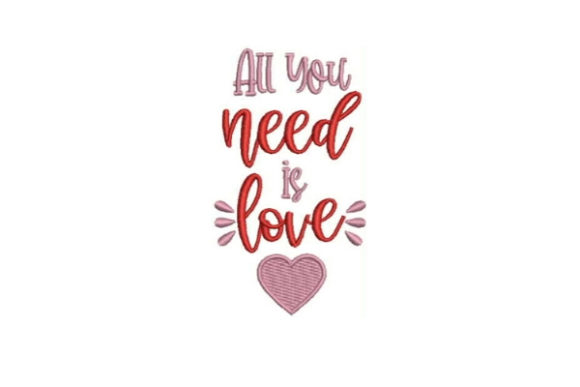
The title All You Need is Love sets a clear mood. This isn’t a bold, graphic statement or a rustic farmhouse phrase. It feels soft, sentimental, and elegantly minimal. The description notes it “stitches out with a beautiful satin stitch,” which promises a smooth, polished finish. This suggests a design that leans toward a decorative, premium feel rather than a funny or festive one. For customers at a fair, this emotional resonance is key—it’s a message that connects instantly, making it a strong candidate for giftable items.
Spotlight Products: Where This Design Will Stand Out
My booth display will feature a range of items: tote bags, aprons, tea towels, caps, patches, pouches, and pillow covers. Not every design works on every product. Here’s where I see All You Need is Love shining.
On tote bags and market bags, this phrase acts as a beautiful focal point. The satin stitch should give it a lovely sheen that catches the eye as someone walks past the booth. For aprons and kitchen towels, it becomes a charming, heartwarming accent, perfect for a Valentine’s Day theme or simply for a lover of kitchen decor. Pillow covers are another excellent home decor application, offering a soft, decorative touch.
One of my most versatile craft fair products is the embroidered patch. All You Need is Love could be stunning as a standalone patch, allowing customers to apply the sentiment to their own items. For smaller, quicker-to-produce items like fabric pouches or caps, the design needs to be scaled appropriately. The success here depends entirely on the design’s composition—we must check for any tiny lettering or details that might lose clarity at a smaller hoop size.
Practical Production: From File to Finished Product
Turning a digital embroidery file into a batch of craft fair products requires careful planning. My first step with any design, including All You Need is Love, is a practical test.
- Test on Scrap Fabric: I’ll stitch it out on the exact fabric types I plan to use: cotton for totes, linen for towels, and perhaps a curved cap sample. This reveals everything.
- Check Thread Contrast & Density: The promised satin stitch can be dense. On textured tea towels or thick bag fabric, I need to ensure the stitches lay smoothly without puckering. Using the correct stabilizer is non-negotiable.
- Review Spacing & Scale: How does the design look as a large statement on a tote versus a small accent on a cap corner? I’ll create at least one real physical mockup of each key product to judge visual impact.
- Compare Fabric Colors: This message will likely sell best on lighter, neutral fabrics (cream, white, light grey) where the thread contrast is high, but I’ll also test it on a dark fabric to see if it remains legible and appealing.
Before any batch production begins, I must confirm the commercial licensing of the embroidery file. The description mentions it “comes with multiple,” which I need to investigate—this could refer to multiple file formats or sizes, which is crucial for using different hoop sizes.
Selling at the Fair: Customer Attention & Booth Display
A design’s success isn’t just about stitching; it’s about selling. All You Need is Love has advantages here.
Its meaning is easy to understand at a glance. In a busy fair environment, customers scanning a table from a few feet away will quickly read and connect with the sentiment. This instant engagement is vital. For my Etsy listings and printable mockups, the design should photograph beautifully, with the satin stitch adding a textural quality that highlights handmade craftsmanship.
For brand consistency, if my shop leans toward romantic or heartfelt themes, this design fits seamlessly. In the booth, I would display it on a range of products to show its versatility, perhaps grouping a love-themed towel, pouch, and patch together to create a strong visual section.
Is it repeatable for batch production? That depends on stitch time and material cost. If the design has moderate stitch count and uses a manageable number of thread colors, it becomes a efficient, profitable small shop product. If it’s overly dense or large, it may be better reserved for premium, higher-price-point items.
Careful-Use Notes for the Embroidery Crafter
Based on typical design characteristics, here are my hands-on warnings for fellow makers:
- Small Sizing: If you scale down All You Need is Love for caps or small pouches, inspect the stitch-out closely. Small lettering in satin stitch can blur or fill in, losing elegance.
- Textured Fabrics: On looped tea towels or heavily textured fabrics, the beautiful satin stitch might not appear as smooth. A test run is essential.
- Curved Surfaces: Embroidering on caps requires proper stabilization and possibly adjusting the design placement to accommodate the curve.
- Dark Fabric: Using a light thread on dark fabric can look stunning, but ensure the design doesn’t have overly fine details that might “disappear” against the dark background.
Final Judgment: A Worthwhile Design for Creative Entrepreneurs
All You Need is Love presents itself as a lovely, sentiment-driven embroidery design. From my designer’s point of view, its real-world value lies in its universal emotional appeal and its potential for a polished, premium finish on the right products. For craft fair sellers, Etsy sellers, and boutique makers, it’s a design that can anchor a Valentine’s Day collection or simply serve as a year-round expression of warmth. Its success, however, will be determined not by the digital file alone, but by the meticulous production steps: testing, scaling, and pairing it with the perfect fabric and product. When done carefully, it can enhance product value, strengthen booth display appeal, and genuinely engage buyers looking for a handmade gift that speaks directly to the heart.